


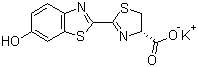
D-Luciferin potassium salt serves as an indispensable, high-sensitivity bioluminescent substrate and versatile molecular imaging agent extensively utilized across preclinical oncology, cellular immunotherapy tracking, in vivo optical imaging, and high-throughput pharmaceutical screening. In small-animal optical imaging and translational medicine, functioning as the specific physiological substrate for firefly luciferase, its superior aqueous solubility, biocompatibility, and rapid tissue biodistribution enable convenient systemic intraperitoneal or intravenous administration; upon encountering luciferase in the presence of ATP, magnesium ions, and molecular oxygen, it undergoes efficient bioluminescent oxidation to emit a steady luminescence signal capable of penetrating mammalian tissues, allowing non-invasive, longitudinal, and quantitative real-time tracking of deep-seated tumor proliferation, micrometastatic progression, and the in vivo homing kinetics of engineered CAR-T or stem cells. In molecular biology and clinical diagnostic kit manufacturing, it serves as a foundational component in luciferase reporter gene assays, ultra-trace ATP bioluminescence quantification, and cytotoxicity profiling to monitor transcriptional promoter activity and validate target signaling cascades. Furthermore, in early-stage drug discovery pipelines, D-Luciferin potassium salt is universally applied in microplate-based luminescence assays to screen large-scale compound libraries for novel kinase inhibitors and receptor modulators.
规格 / Specification
|
项目 / Item |
标准 / Standards |
|
外观 / Appearance |
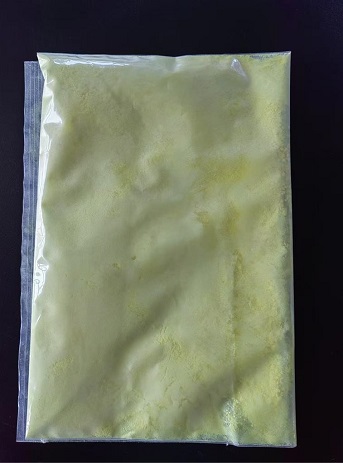
淡黄色或黄色结晶粉末 / Light-yellow or yellow crystalline powder |
|
气味 / Odor |
典型 / Characteristic |
|
鉴定 / Identification |
IR/HPLC/Mass/NMR Spectrum |
|
纯度 / Purity |
≥98.5% |
功效 / Functions:
D-荧光素是荧光素酶(Luciferase)的常用底物,普遍用于整个生物技术领域,特别是体内活体成像技术。D-荧光素也常用于体外研究,包括荧光素酶和ATP水平分析;报告基因分析;高通量测序和各种污染检测。
D-Luciferin is a commonly used substrate for luciferase, widely applied throughout the biotechnology field, particularly in in vivo imaging. It is also frequently used in in vitro studies, including luciferase and ATP level analysis; reporter gene analysis; high-throughput sequencing; and various contamination detection.
D-Luciferin's mechanism of action involves the oxidation of D-Luciferin (the substrate) to produce light under the influence of ATP and luciferase. When luciferin is in excess, the number of photons produced is positively correlated with the concentration of luciferase. After transfecting cells with a plasmid carrying the luciferase-encoding gene (Luc), and introducing it into research animals such as mice and rats, followed by the injection of luciferin, changes in light intensity are detected using bioluminescence imaging (BLI) to monitor disease progression or drug efficacy in real time. The influence of ATP on this reaction system can also be utilized, with changes in bioluminescence intensity indicating energy or vital signs. D-Luciferin is also commonly used in in vitro studies, including luciferase and ATP level analysis; reporter gene analysis; high-throughput sequencing; and various contamination detection.
Currently, there are three product forms on the market: D-Luciferin (free acid), D-Luciferin sodium salt, and D-Luciferin potassium salt. The main difference between these three products lies in their solubility.
1: D-Luciferin (free acid) has very weak solubility in water and buffer systems, except in weak bases such as NaOH and KOH solutions. It is soluble in methanol (10 mg/ml) and DMSO (50 mg/ml).
2: D-Luciferin sodium salt and D-Luciferin potassium salt dissolve very easily and quickly in water or buffer solutions, making them convenient to use. The solvents are non-toxic, making them particularly suitable for in vivo experiments. Once prepared as solutions, the three products are substantially similar in most applications.
3: There is essentially no difference between D-Luciferin sodium salt and D-Luciferin potassium salt; the main difference lies in usage habits and other factors. Overall, there is significantly more literature on the application of the potassium salt than the sodium salt.
应用 / Applications:
D-荧光素钾盐是一种利用荧光素酶报告基因表达,进行生物活体成像检测的底物。具体作用机制如下,在ATP、镁离子和氧气的作用下,荧光素酶以D-荧光素钾盐作为底物,产生强烈的生物发光信号。活体成像实验中将能够表达荧光素酶的细胞或mRNA等表达载体导入到实验动物体内,而后注射D-荧光素钾盐,通过小动物活体光学成像系统来检测发光强度的变化,进而反映荧光素酶的表达水平。
D-Luciferin potassium salt is a substrate for in vivo imaging detection using luciferase reporter gene expression. Its mechanism of action is as follows: under the influence of ATP, magnesium ions, and oxygen, luciferase uses D-Luciferin potassium salt as a substrate to generate a strong bioluminescent signal. In in vivo imaging experiments, cells or expression vectors such as mRNA capable of expressing luciferase are introduced into experimental animals, followed by injection of D-Luciferin potassium salt. Changes in luminescence intensity are then detected using a small animal in vivo optical imaging system, thereby reflecting the expression level of luciferase.
D-Luciferin potassium salt is commonly used in conjunction with luciferase in bioluminescence imaging and luminescence experiments, providing a sensitive and quantitative detection method widely applied in biological research.
1. Bioluminescence Imaging: D-Luciferin potassium salt is a luciferin substrate that undergoes a chemical reaction catalyzed by luciferase to produce fluorescence. This fluorescence reaction is widely used in biological research, such as reporter gene detection, cell labeling, and protein localization.
2. Bioluminescence Experiments: Luciferase systems (such as luciferase and D-Luciferin potassium salt) are also used in bioluminescence experiments. In these experiments, the luciferase-catalyzed emission of D-Luciferin potassium salt is applied to detect gene expression, protein interactions, and drug screening.
3. Molecular Biology Research: D-Luciferin potassium salt systems are widely used in molecular biology techniques, such as dual-luciferase reporter gene systems for detecting transcriptional levels and protein-protein interactions.
包装 / Package:
1/10/100/500g/bottle
运输编号 / UN number:
普通化学品 / Not dangerous goods
储存条件 / Store at:
密封保存于阴凉干燥处,避光避热。 / Keep container tightly sealed. Store in a cool, dry place. Protect from light and heat.
保质期 / Shelf Life:
两年 / Two years
If you would like to make an inquiry or learn more about the products, please fill in the following form, we will reply in 24 hours.
